Japan is staging a comeback worth ¥10 trillion. South Korea just committed $518 billion to AI memory. The Netherlands controls the only machine that makes every advanced chip on earth. Singapore, Malaysia, and Sweden each bring something India cannot build alone. Here is what showing up at Semicon India 2026 means — for each of them, and for India.
A country pavilion at Semicon India is not a trade show booth. It is a diplomatic signal — a statement about where a country sees India in its semiconductor supply chain over the next decade. The six countries at Yashobhoomi in September 2026 each have a specific reason for being there. None of them is doing India a favour. They are here because India has something they need: a market, a workforce, a manufacturing partner, a geopolitical hedge, or all four.
For the first time in history, the global semiconductor industry crosses one trillion dollars in annual sales — fuelled by the AI infrastructure boom. Every country at Semicon India 2026 wants a larger piece of this.
The industry's centre of gravity is shifting from the Taiwan-Korea duopoly toward a "plus-two" model: the existing leaders plus trusted alternates. Japan, India, the US, and the EU are all racing to be the second pair.
From zero international pavilions in 2024 to six in 2026. The speed of this expansion is itself a signal — the world has decided India is serious.
Every country in this building knows about the ₹76,000 crore India Semiconductor Mission. Their pavilions are, in part, a response to that invitation.
Equipment · Materials · Comeback story · TSMC Kumamoto · Rapidus 2nm
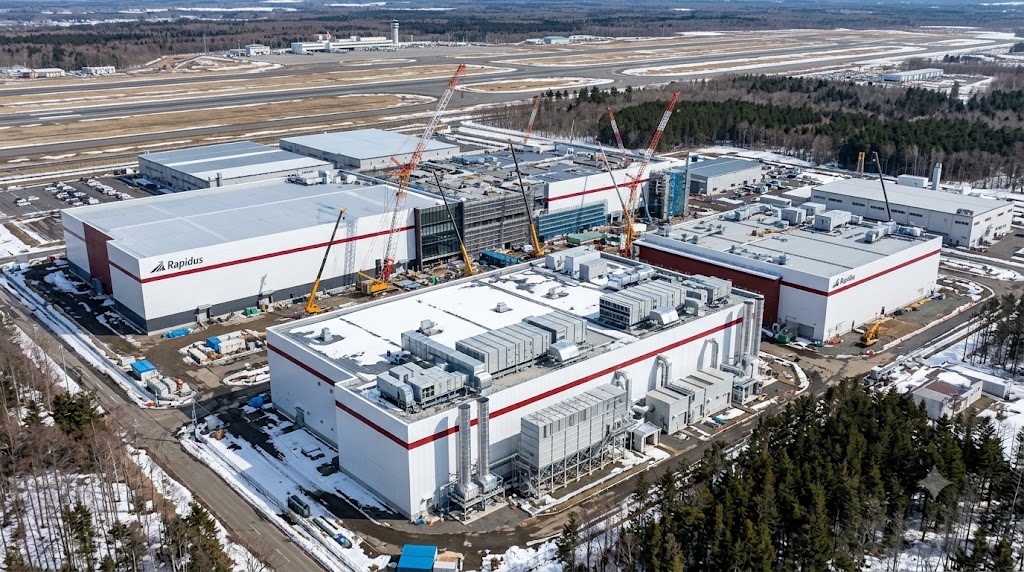
Japan once controlled 50% of the global semiconductor market. By 2010, that share had collapsed to under 10% — the victims of a horizontal specialisation model they were too slow to adopt. The decade between 2021 and 2026 has been Japan's most aggressive semiconductor policy push since the 1980s. The result: TSMC's Kumamoto fab is producing 12nm chips. Rapidus successfully prototyped a 2nm GAA transistor in July 2025. And the government has committed nearly $65 billion through 2030 to make sure this is not another false start.
Japan's pavilion is about equipment and materials, not chips. Tokyo Electron (world's 3rd largest equipment maker), Renesas (already in CG Semi at Sanand), Shin-Etsu Chemical (silicon wafers), and SCREEN (process equipment) are the reasons Japan is here. Japan dominates the inputs India needs to scale its OSAT facilities — the speciality gases, wafer-handling equipment, and inspection tools that every Sanand and Dholera facility must source from somewhere.
Questions India should be asking at this pavilionMemory · HBM · Samsung · SK Hynix · $518 billion and counting
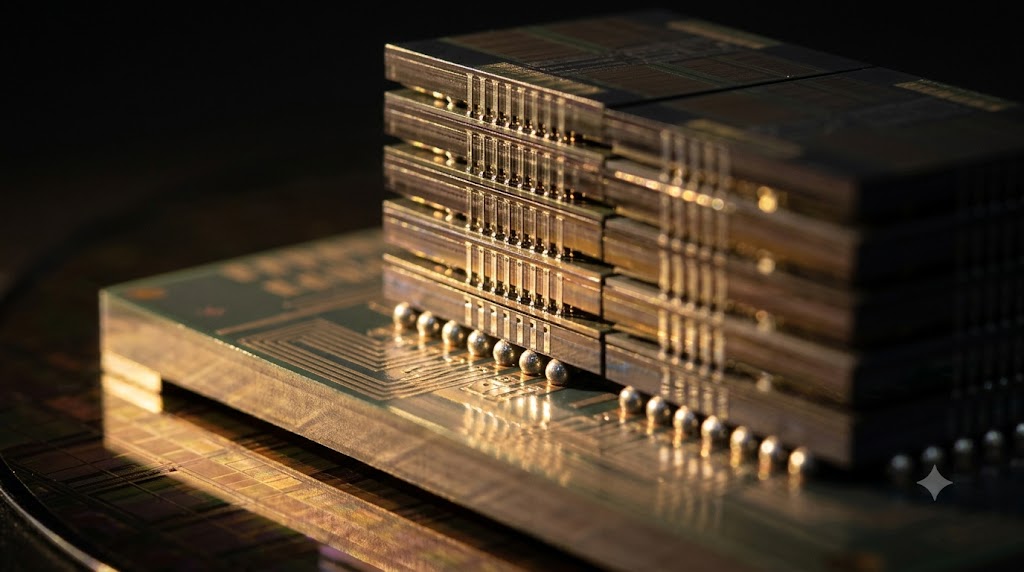
South Korea is not attending Semicon India 2026 as a curious observer. It is attending as the dominant force in the technology that powers every AI system on earth. SK Hynix's HBM chips are inside every Nvidia GPU. Samsung and SK Hynix together control approximately 80% of global high-bandwidth memory production. And on June 29, 2026, South Korean President Lee Jae-myung announced the largest coordinated semiconductor investment in history — $518 billion from Samsung and SK Hynix for four new memory fabs. SK Hynix shares are up 288% year-to-date.
South Korea's pavilion is about memory and India's data centre ambitions. The HBM shortage that has constrained AI deployments globally is expected to last until at least 2028. India's hyperscaler buildout — Jio, Adani, Microsoft Azure, Google Cloud — is entirely dependent on Samsung and SK Hynix memory. South Korea is here to ensure India stays within the Korean supply chain for the AI infrastructure buildout, and to explore whether India can become a packaging and test partner for next-generation memory as Korean fab capacity runs tight.
Questions India should be asking at this pavilionASML · EUV lithography · The only machine that makes advanced chips possible
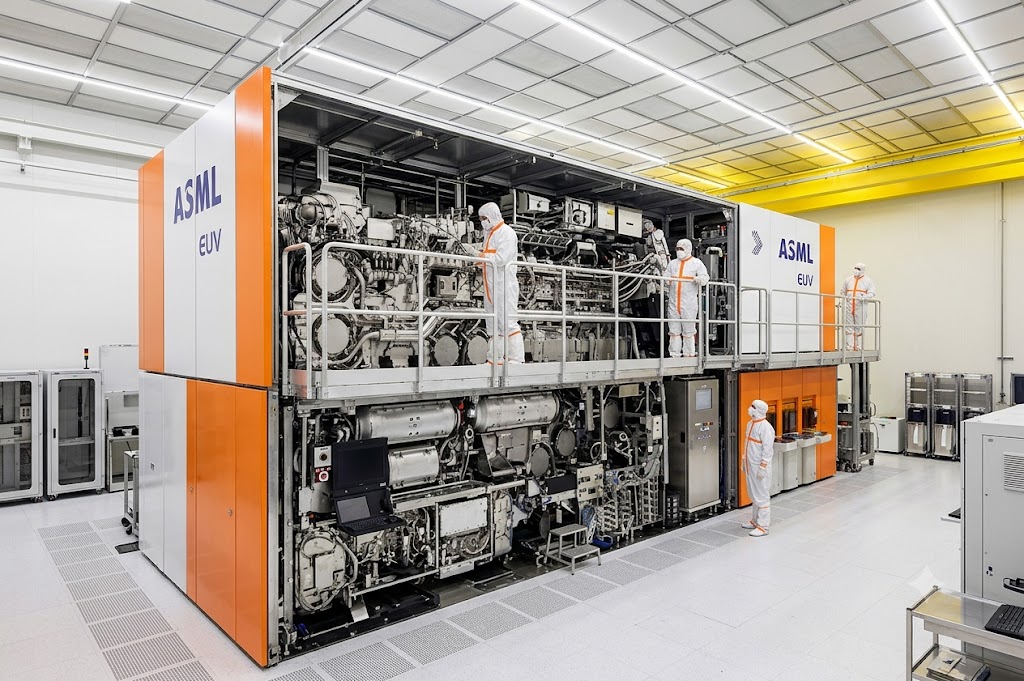
There is one company on earth that makes the machines that make every advanced semiconductor chip. It is Dutch. ASML's EUV lithography systems — priced at €180 million each for standard models, €380-400 million for High-NA — are the single most consequential piece of industrial equipment in the global technology supply chain. No EUV, no sub-7nm chips. No sub-7nm chips, no advanced AI. No advanced AI, no everything else. The Netherlands is at Semicon India 2026 because ASML signed a framework agreement with Tata Electronics for the Dholera fab in May 2026. This pavilion is, in large part, a formal recognition of that relationship.
The Netherlands pavilion is ASML — and ASML's presence changes what India means to the global chip industry. Before the Tata-ASML agreement, India was an OSAT country: assembly, test, packaging. After it, India is on a trajectory toward front-end logic fab. That distinction matters enormously to every other country in this building. The Netherlands is here to signal that the partnership is real, and to begin the conversation about what an India-ASML ecosystem looks like over the next decade — in training, service engineering, equipment supply chains, and cleanroom infrastructure.
Questions India should be asking at this pavilionR&D · Advanced packaging · IP hub · Asia's semiconductor headquarters
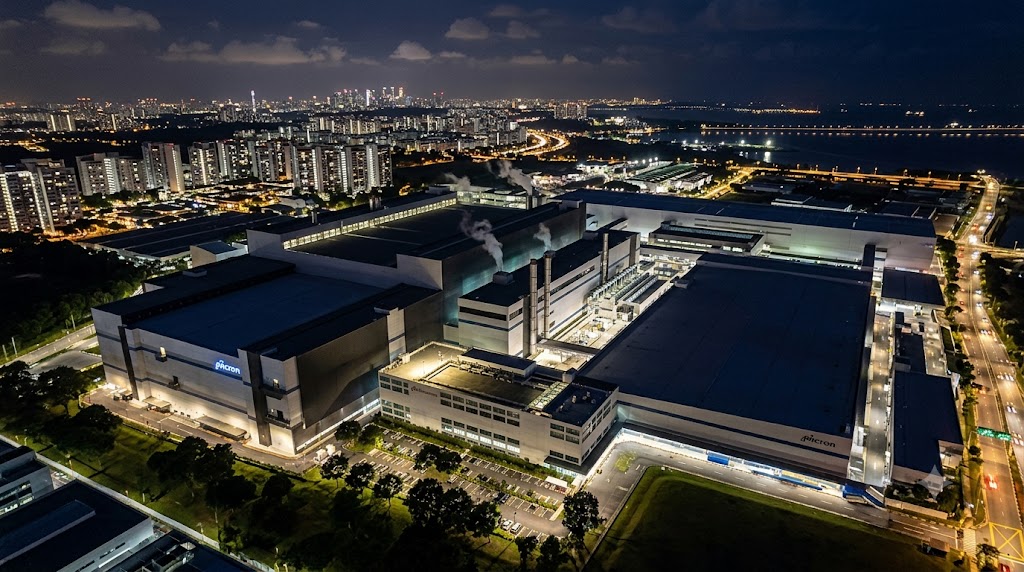
Singapore is the most advanced semiconductor ecosystem in Southeast Asia by almost every measure — R&D intensity, IP density, advanced manufacturing capability, and talent quality. Every major semiconductor company has its Asia headquarters in Singapore: TSMC, GlobalFoundries, Micron, Applied Materials, Lam Research, and dozens more. Singapore's role in the global chip supply chain is not to be a volume manufacturer — land and labour costs make that uncompetitive — but to be the advanced R&D and design hub, the IP protection regime, and the precision manufacturing node for the highest-value processes that require stable governance and world-class infrastructure.
Singapore's pavilion is about advanced packaging, chiplets, and the IP services India needs to move up the value chain. Singapore's A*STAR Institute of Microelectronics (IME) is one of Asia's leading advanced packaging research centres. India's NITI Aayog 2035 roadmap explicitly targets advanced packaging as India's strategic priority — chiplets, 2.5D integration, SiP. Singapore has a decade of head start on that journey and is the most logical partner for India to learn from, invest alongside, and eventually complement rather than compete with.
Questions India should be asking at this pavilionOSAT · Testing · Penang Silicon Valley · Moving up the value chain
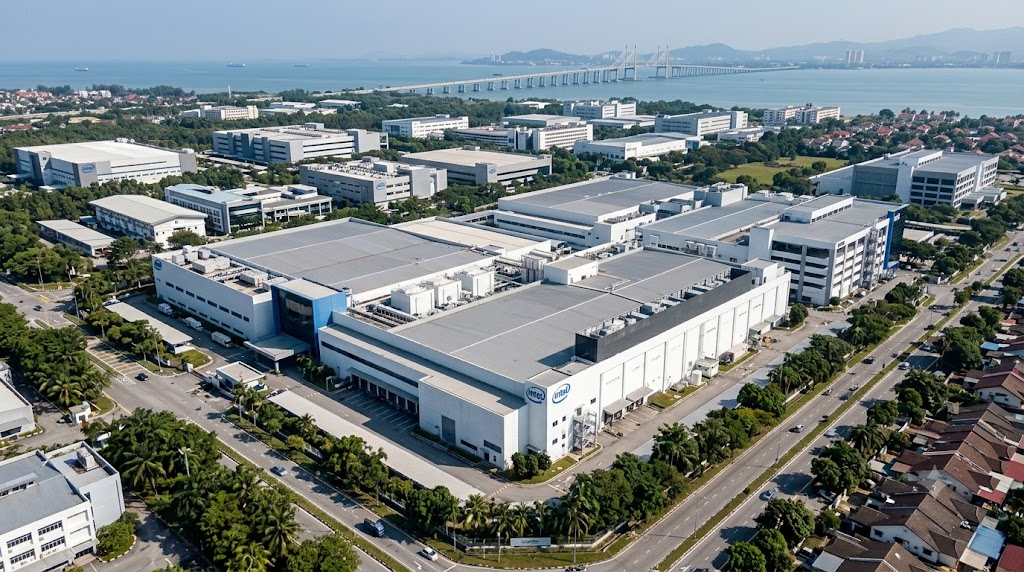
Malaysia is, right now, India's most direct mirror and most instructive competitor in semiconductors. Like India, Malaysia built its semiconductor industry on OSAT — assembly, test, and packaging — primarily in Penang (the "Silicon Valley of the East") and Kulim. Like India, Malaysia accounts for approximately 13% of global semiconductor testing and packaging. And like India, Malaysia is now trying to move up the value chain into design, advanced packaging, and eventually front-end manufacturing. The key difference: Malaysia has a 40-year head start, and companies like Intel, Infineon, and Texas Instruments have been there since the 1980s.
Malaysia's pavilion is the most directly instructive for India — because Malaysia is exactly where India wants to be in ten years, and it is about to tell India what that journey actually requires. India and Malaysia are competing for the same global supply chain mandates — OSAT diversification from China and Taiwan. But Malaysia is 40 years ahead and has the OEM relationships India is still building. The honest question India should be asking at this pavilion: not "can we partner?" but "what did you get right, and what would you do differently if you were starting now?"
Questions India should be asking at this pavilionEricsson · 5G/6G chips · RF semiconductors · Sustainability leadership
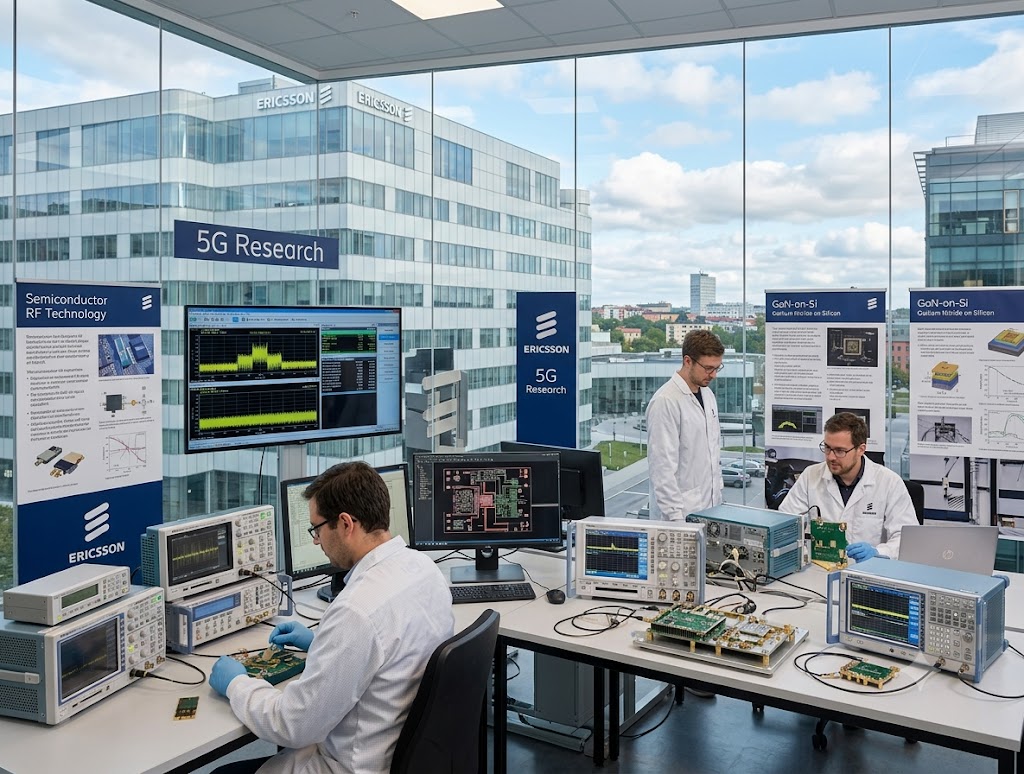
Sweden is the most surprising pavilion at Semicon India 2026 — and arguably the most strategically interesting for India's specific moment. Sweden does not have ASML's monopoly or South Korea's scale. What it has is Ericsson: the company that has supplied more of the world's 5G radio network infrastructure than any other. And 5G radio infrastructure runs on Radio Frequency (RF) semiconductors, power amplifiers, and compound semiconductor devices — the exact category of chips that India needs for its own 5G rollout, and the exact category that NITI Aayog's 2035 roadmap identifies as a strategic priority alongside AI chips.
Sweden's pavilion is about 5G, 6G, and compound semiconductors — the intersection of India's telecom ambitions and its semiconductor strategy. India is rolling out one of the world's largest 5G networks. The RF and power semiconductor devices that run that network are imported entirely. NITI Aayog's 2035 roadmap explicitly targets GaN and SiC as strategic priorities — the exact materials Sweden's semiconductor ecosystem specialises in. The Sweden pavilion is the least-expected but potentially most actionable conversation at Semicon India 2026 for an India that wants to make its own 5G chips.
Questions India should be asking at this pavilionA summary reading of each country's strategic interest at Semicon India 2026 — and the honest India-side ask.
| Country | Primary strength | Why they're at Semicon India | What India needs from them | Relationship status |
|---|---|---|---|---|
| 🇯🇵 Japan | Equipment & materials | Renesas already in Sanand; watching Dholera-ASML closely | Equipment supply chain for OSAT scale-up; Renesas tech transfer | Active — Renesas/CG Semi |
| 🇰🇷 South Korea | HBM memory & AI chip supply | Wants India as a packaging partner + AI data centre customer | HBM supply chain access; advanced packaging know-how | Customer relationship |
| 🇳🇱 Netherlands | EUV lithography monopoly | ASML-Tata Dholera framework agreement signed May 2026 | EUV deployment, field engineering talent, DUV for OSAT | Active — Dholera deal |
| 🇸🇬 Singapore | R&D, IP, advanced packaging | Wants India as a volume complement; advanced packaging partner | A*STAR IME collaboration; chiplet research access | Exploratory |
| 🇲🇾 Malaysia | OSAT at scale — 40 year lead | Monitoring India as competitor; open to supply chain partnership | 40-year playbook: what worked, what to skip, who to target first | Competitor & teacher |
| 🇸🇪 Sweden | RF/5G/GaN — Ericsson ecosystem | India is Ericsson's largest 5G market; compound semi push | GaN/SiC for telecom; 6G joint research; Ericsson localisation | Underutilised — big upside |
Every country at Semicon India 2026 is there because India represents something in their global semiconductor calculus — a market, a manufacturing partner, a talent source, a geopolitical hedge, or all four. The ₹76,000 crore ISM commitment changed the conversation. The Tata-ASML agreement made it concrete. The three Sanand inaugurations in 2026 proved it is real.
What India does with these 70 days before September 17 — and these three days on the floor at Yashobhoomi — will determine whether 2026 is remembered as the year India joined the global semiconductor supply chain, or another year of promising announcements. The pavilions will be there. The advisors will be there. The question is who walks in prepared.